How to Reinvent Yourself After 50: 7 Things No One Tells You
Last Updated on July 15, 2026 by Tania Grozelle
In 2018, long before we packed a single suitcase, we made a decision that changed the trajectory of our lives.

We were living in a region heavily dependent on oil and gas. When the industry slowed, everything slowed with it. At the same time, we were running businesses with employees, watching costs rise, and learning firsthand how quickly economic and political shifts could reshape entire markets. Real estate had always been our retirement plan — rental properties, our version of a pension. Even that began to feel exposed.
We are Gen X. We do not automatically trust institutions to carry us through the next thirty years. Government pensions, shifting housing markets, volatile industries, business partners, payroll. There were too many variables, too much outside our control.
So we decided to simplify.
We sold. We exited partnerships. We stepped away from employees and shifted our focus to building online digital assets we owned outright. We wanted no partners, no payroll, no dependency on a single local economy, no massive capital at risk. Just skills, leverage, and something we could build from anywhere.
By 2022, at 49 & 53, we moved to Mexico. The lower cost of living bought us time and breathing room to build this next chapter with intention rather than desperation. (If you’ve ever wondered whether that kind of move is realistic, I wrote about what it actually looks like to give yourself one year and reset your life in Puerto Vallarta.)
Reinvention after 50 is rarely about drama. It is about control, clarity, and building something that lasts.
Here are seven things no one really tells you about reinventing yourself after 50.
1. You Are Not Starting Over
Reinvention after 50 is not about wiping the slate clean. You are starting from something — from experience, skills, hard-won relationships, and a level of self-knowledge that simply did not exist when you were younger. That foundation matters more than most people acknowledge.
You know what does not work for you. You know where you tend to overextend yourself. You know what you value in a way that no amount of ambition at 25 could replicate. This is not a reset — it is a recalibration. That distinction changes everything, and it is a big part of why Gen X women are actually the most equipped to move abroad, start a blog, and thrive — not despite their experience, but because of it.
2. Reinvention Is Usually Triggered by a Combination of Factors
Reinvention rarely happens because of one single event. It is usually a convergence — a combination of things arriving at once — and recognizing that pattern is often the first real step toward doing something about it.
Work tends to play a central role. Careers that once made sense can start to feel deeply misaligned. Sometimes the shift is gradual, a slow erosion of meaning that is hard to name until one Monday morning you realize you are dreading the week in a way you never did before. Other times the catalyst is more specific — a workplace that has become genuinely toxic, draining not just your energy but your sense of who you are. That kind of environment can be one of the most powerful catalysts for reinvention there is. Not because you wanted the disruption, but because the pain of staying finally outweighs the fear of leaving.
Around the same time, other life changes tend to surface. Divorce, an empty nest, caring for aging parents, burnout, health awareness, a quiet restlessness you cannot quite name — together, these experiences tend to surface a deeper question that most of us have been too busy to ask until now.
What do I actually want the rest of my life to look like?
If a toxic work situation is part of what brought you here, I wrote Toxic Proof specifically for that moment — how to protect yourself, plan your exit, and move forward without losing yourself in the process. The post 10 Toxic Workplace Signs That Made Me Quit My Job is a good place to start if you want the unfiltered version of how that breaking point actually feels.
3. You Actually Have an Advantage You Didn’t Have When You Were Younger
One of the biggest myths about starting something new later in life is that age is a liability. In many ways, the opposite is true.
The wisdom that comes with experience shows up in practical ways. You solve problems more efficiently. You recognize patterns faster. You know how to find resources instead of spending months figuring everything out the hard way. Mistakes still happen, but the learning curve is often shorter and far less dramatic than it was decades ago.
Research backs this up. Studies on entrepreneurship consistently show that people who start businesses in midlife are more likely to succeed than much younger founders. Experience, judgment, and emotional regulation play a significant role in long-term outcomes — and at 50, you have all three in abundance.
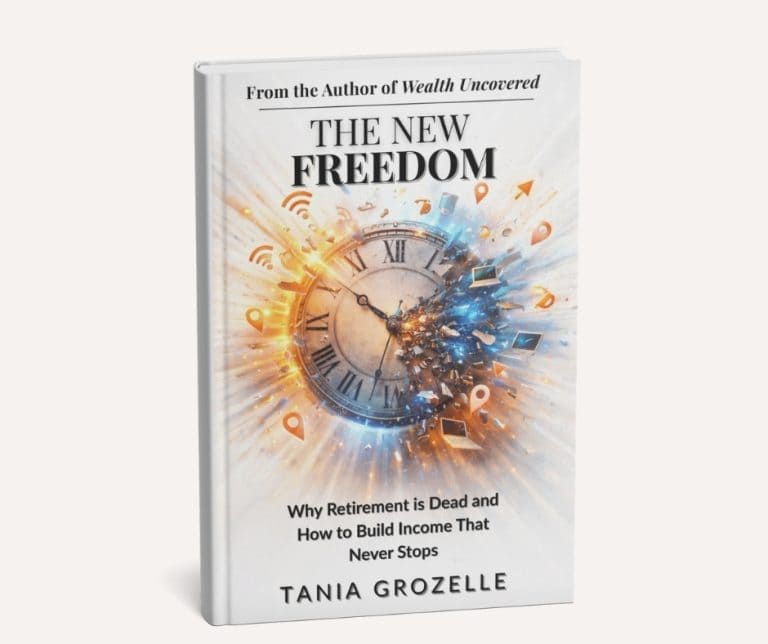
This is exactly the premise behind The New Freedom — the book I wrote for women at this precise moment in their lives.
A woman with twenty-five years of professional experience carries assets that rarely get acknowledged: negotiation skills, project management discipline, the ability to read people quickly, pattern recognition, an understanding of how organizations function, and the capacity to manage complexity without panic. Those skills translate directly into digital business and independent income. One of the most underrated paths is becoming a coach or mentor — a second-act career that lets you monetize everything you have already learned. Experience shortens the learning curve. That is the advantage.
4. You Have Less Bandwidth, and That Is a Good Thing
This stage of life brings a new awareness of energy and limits. Long grinding days lose their appeal. Hustling twelve hours straight is neither realistic nor sustainable for most people over the long term — and honestly, that is not a weakness. It is information.
That limitation creates clarity. You become more selective about where your energy goes. You stop tolerating unnecessary friction. You pay attention to what drains you and what genuinely fuels you. That awareness becomes a guide for building something that supports your life instead of consuming it.
This is also why I think the real goal is not to work less — it is to work on your own terms. There is a meaningful difference between the two.
5. Focused Time Matters More Than Available Time
Research shows that most people only have about four hours a day of truly focused, high-quality cognitive work. Everything else tends to be lighter tasks, distraction, or recovery time. When you are building something for yourself, especially alongside existing responsibilities, those focused hours are the ones that move the needle.
You stop stretching four hours of meaningful work into ten hours of scattered effort. You sit down with intention. You make your time count. This is where reinvention after 50 becomes genuinely powerful — constraint encourages smarter work, not just harder work. It is also part of why starting messy and building before you feel ready is almost always better than waiting until everything is perfectly mapped out.
6. You Can Reinvent Yourself Without Blowing Up Your Life
Reinvention does not require burning everything down. Change can happen gradually and deliberately, and that approach is often more sustainable and far less stressful than the dramatic all-or-nothing version most people imagine.
Financial fear is one of the biggest barriers to reinvention. The assumption tends to be that change requires quitting first and figuring it out later — but that approach creates unnecessary risk and pressure. A more grounded model is parallel building: keeping your current income while you quietly and deliberately build the next layer. Test ideas. Validate demand. Generate small proof points before making larger decisions. Reinvention becomes an evolution rather than a gamble.
Part of that evolution is understanding which income models actually give you flexibility — something I break down in 7 Income Streams You Can Start to Make Money Online in 2026. You also do not need to find your passion first. That is one of the most paralyzing myths in the reinvention conversation. Skills and strategy matter more.
7. This Can Be the Most Aligned Chapter Yet
Around this age, time starts to feel different. There is still a great deal of life ahead, but it no longer feels unlimited — and that awareness is not depressing. It is clarifying. You want the years ahead to matter. You want your energy and attention invested in things that feel meaningful, sustainable, and genuinely yours. You want a life that fits who you are now, not who you were expected to be twenty years ago.
This stage of life also offers a quieter kind of confidence. You are not chasing validation anymore. You are building with intention. That combination of wisdom, focus, and clear-eyed realism creates an incredibly strong foundation — one that most people cannot access until they have lived enough life to know what they actually want.
The Income Side of Reinvention — Why It Matters More Than People Admit
Reinvention is often framed as an emotional or identity shift. Change your mindset. Change your habits. Redefine your purpose. All of that matters. What rarely gets discussed honestly is the income side of the equation.
You can do all the inner work you want, and if your income structure still depends on a job, business model, or industry that no longer fits who you are, the tension remains. The women who reinvent most successfully do something different — they build income that matches their next chapter instead of forcing their next chapter to orbit around an outdated income structure.
This does not mean quitting impulsively. It means thinking strategically about how you earn. Does your income depend on one employer, one industry, one location, or one economic cycle? Or is it diversified, flexible, and something you can build regardless of geography?
One angle that does not get nearly enough credit is publishing. I manage a nonfiction publishing portfolio that generates over $2,000 a month on Amazon KDP — and it is one of the most accessible income models for people who have accumulated real expertise. If you have never considered it, the beginner’s guide to publishing nonfiction on Amazon is worth a read.
This is the foundation of The New Freedom. Reinvention without income alignment is incomplete. When your work structure supports your identity instead of constraining it, the whole reinvention becomes sustainable rather than temporary.
The Practical First Step Most People Skip
Most women who talk about reinvention spend years thinking about it. The ones who actually move forward take one practical step early.
Write down three things your current life has taught you that someone ten years behind you would pay to understand. Not vague lessons — specific insights. Mistakes you avoided. Systems you refined. Patterns you can now recognize instantly that once confused you completely.
That list is not random reflection. It is raw material. It can become a book, a blog, a consulting offer, a workshop, a digital product, a framework. If you want a more in-depth look at how to monetize your expertise without feeling salesy, that post walks through the practical mechanics.
Clarity does not arrive fully formed. It is built through articulation, and that simple exercise often reveals more opportunity than years of abstract planning ever could.
Why I Wrote The New Freedom
As I moved through my own reinvention, I kept noticing a gap. Most of the advice available was either aimed at people just starting out or pushed extreme solutions that felt disconnected from real life. I wanted something more grounded — a way to rethink work, freedom, and identity without pretending I was twenty again or ignoring the responsibilities that actually exist.
That is why I wrote The New Freedom: Why Retirement Is Dead and How to Build Income That Never Stops.
This book came out of real conversations and lived experience. It reflects the reality that traditional retirement no longer works the way many of us were promised it would — and it also acknowledges that most people do not want to grind endlessly or gamble everything on a risky reinvention. It is not about hustling harder or starting over from scratch. It is about clarity, intentional change, and building income in a way that supports freedom, flexibility, and sustainability over time.
If you are over 50 and quietly wondering what the next chapter could look like, The New Freedom was written with you in mind.
Frequently Asked Questions About Reinventing Yourself After 50
Is it too late to start over at 50?
No — and the framing matters here. You are not starting from zero. You are starting from experience. At 50, you bring pattern recognition, emotional regulation, professional discipline, and perspective that younger people simply do not have yet. Reinvention at this stage is rarely reckless. It is strategic. The timeline may look different than it would have at 25, but the foundation is considerably stronger.
How do I reinvent myself without risking financial stability?
You do not quit first — you build alongside what already exists. Reinvention does not require burning down your current income. It requires building a second layer deliberately and testing it before making larger decisions. Parallel building removes pressure and reduces fear. Financial stability and reinvention can coexist when approached thoughtfully. The digital assets post covers this well if you want a concrete framework.
What if I do not know what I want to do next?
Clarity often follows action, not the other way around. Start by identifying what your current life has taught you that someone ten years behind you would pay to understand. Your experience contains structure, systems, and insight that can be translated into income. Reinvention rarely begins with a perfect vision — it begins with articulation. For some inspiration along the way, 7 life-changing audiobooks for women rethinking everything after 50 is a good place to start listening.
What if I am not “tech-savvy”?
Most digital platforms today are far more accessible than people assume, and the barrier is usually confidence rather than capability. Learning new tools at 50 is not fundamentally different from learning new systems over the course of a career. The skill is adaptability — and you already have it.
Do I need to move, leave my job, or make a dramatic change?
No. Reinvention is about alignment, not theatrics. Some people relocate. Others redesign their work from exactly where they are. The common denominator is intentional income and identity alignment — geography is optional, but strategy is not. That said, if a lower cost of living and a fresh environment appeals to you, you don’t need to be rich to rewrite retirement explains exactly why.