How to Tell if an Online Course or Coaching Program Is Legit (Before You Waste Your Money)
Last Updated on July 15, 2026 by Tania Grozelle
Avoid the hype, verify the value, and choose programs that actually deliver.
You’ve seen the pitch: someone on a beach with a laptop claiming they made $10K last month doing “simple freelance work.” It’s designed to trigger your hope and bypass your logic.
I know because I fell for one.
I paid for an “all-in-one affiliate marketing platform” that promised complete training, tools, and support. What I got were a few generic videos, endless “coming soon” pages, and silence. The money hurt—but losing six months of progress hurt more.
That experience and others have inspired Toxic Proof and this guide—to help you spot the red flags before you lose time, money, and confidence.
The Hard Truth About Online Courses
Most people don’t finish online courses, and even fewer see results. Sometimes it’s the student’s fault—wrong timing or unrealistic expectations—but often it’s the course itself.
Some “educators” are master marketers with poor delivery. They build programs to sell, not to teach. Your defense is knowing how to verify what’s real before you pay.
7 Red Flags That Scream “Scam”
1. They Sell the Dream, Not the Process
Big promises, vague steps. You’ll hear “financial freedom” and “passive income,” but not which skills you’ll learn or how you’ll get there. Legit teachers talk about process and progress, not fantasies.
2. Fake Urgency
“Only 3 spots left!” “Price doubles at midnight!” Real educators don’t rely on countdown clocks. If you feel pressured to buy immediately, it’s a manipulation tactic.
3. No Clear Curriculum
If you can’t preview a detailed syllabus, walk away. The best teachers show exactly what you’ll learn, how it’s structured, and what outcomes to expect.
4. No Proven Experience
If their only success story is “selling courses about success,” be cautious. Look for evidence of real results—client work, portfolio projects, or press features from before they started teaching.
5. Unverifiable Testimonials
Stock photos, vague praise, no measurable results. Real testimonials include names, numbers, and a traceable online presence.
6. Weak or Nonexistent Refund Policy
Vague refund terms or “no refunds after 24 hours” are red flags. Honest businesses are transparent and stand by their programs.
7. Everything Is “Secret” or “Proprietary”
If someone can’t explain what they teach in plain language, they probably don’t understand it—or there’s nothing behind the curtain.
What Legit Programs Have in Common
- Transparent expectations about time, effort, and results
- Detailed curriculum and clear learning outcomes
- Instructors with verified experience
- Real testimonials from identifiable people
- Active communities and responsive support
- Refund policies written in plain English
- Pricing that matches the value delivered
Quick Verification Checklist
Research
- Google “[Name or Program] + review + scam + complaint.”
- Check the instructor’s LinkedIn or professional history.
- Look for client work, case studies, or industry mentions.
- Use tools like Whois.com to see when their domain was created.
Verify
- Request the full syllabus and learning outcomes.
- Ask to speak with a current or past student (not an affiliate).
- Read refund terms carefully and get them in writing.
- Ask to see the student community or support group.
Decide
- Compare with at least two alternatives.
- Wait 48–72 hours before paying.
- Make sure you have time to implement what you’ll learn.
- Listen to your gut—calm excitement is good, pressure is not.
The 12 Questions That Separate Hype from Help
Program and Outcomes
- What skills will I master by the end?
- How many hours per week are required?
- How long do results usually take?
- What percentage of students complete the program?
- Can I see the full syllabus or a sample module?
Instructor and Proof
6. What did you build before you started teaching this?
7. Do you still do client or project work?
8. What makes your method different (in plain English)?
Support and Fit
9. What kind of support is included, and for how long?
10. Can I speak with non-affiliate alumni?
11. Are there extra costs (software, ads, tools)?
12. What happens if I fall behind or need help?
If they dodge these questions, you already have your answer.
When It’s Safe to Say “Yes”
Say yes when:
- You’ve verified the instructor’s experience and results.
- The course teaches the skills you actually need.
- There’s real human support and active communication.
- The refund and pricing policies make sense.
- You feel calm and confident, not pressured.
Say no when:
- You’re being rushed or “love-bombed.”
- They have no proof of results outside selling courses.
- The community looks inactive or abandoned.
- Refunds are vague or denied without reason.
- You’d have to go into debt to pay for it.
What Real Education Looks Like
Legit programs are often the least flashy. They focus on structure, skill development, and progress tracking—not hype.
You’ll see realistic testimonials like “Landed my first $3K client after 8 weeks” or “Finally understood pricing and negotiation.” These aren’t instant success stories—they’re sustainable ones.
If You’ve Already Been Burned
- Document what was promised vs. what was delivered.
- Ask for a refund or dispute the charge if services weren’t provided.
- Leave factual reviews to help others.
- Reflect on which warning signs you missed.
- Rebuild confidence with smaller, verifiable programs or self-paced learning.
Trust Your Gut—But Verify
If something feels off, investigate.
If something feels too good, slow down.
If someone pressures you, it’s not a fit.
Once you recognize these patterns, you’ll start spotting manipulation everywhere—from business deals to personal relationships. That’s the foundation of becoming toxic proof.
Frequently Asked Questions
How long should I research before buying?
At least 48–72 hours. A legitimate opportunity won’t vanish that fast.
Is it rude to ask for alumni references?
Not at all. Honest educators appreciate careful buyers.
Are expensive courses always better?
No. Price and quality don’t always match. Evaluate based on proof, structure, and support.
Can new creators still be legit?
Yes—but they should be transparent about their experience and charge accordingly.
Free content vs. paid course?
Free content is great for basics. Paid courses add value through structure, accountability, and mentorship—if they’re real.
The Bottom Line
Your dream of building location-independent income is valid. Online education can absolutely help you achieve it—but only when it’s genuine.
Do your research. Ask hard questions. Take your time.
Verification before trust—always.
That mindset can save you not just money, but months of wasted energy.
Next Step: Protect Yourself from Manipulation
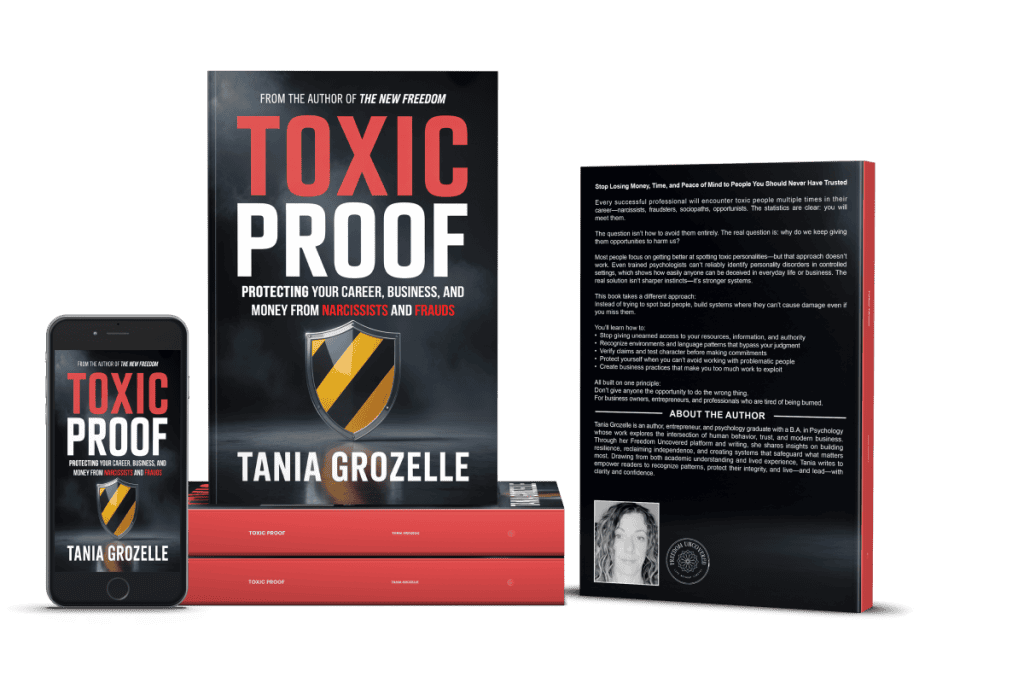
If you want to go deeper into spotting manipulation—in courses, partnerships, or any business deal—read Toxic Proof.
It’s your complete framework for protecting your time, money, and future from toxic people and empty promises.
- Why “Save Until 65” Is Broken — And Why Self-Publishing Is the Income Gen X Women Should Build Instead
- A Former Google Executive Just Described the Next 15 Years — And Gen X Needs to Hear This
- How to Turn What You Know Into a Course (Even If You’ve Never Done It Before)
- Why Gen X Is Sitting on a Digital Gold Mine and Doesn’t Know It
- You Weren’t Programmed to Build Digital Wealth — And That’s Actually Good News